
Fourth Meeting of the VHEalthLab Program: Advancing Multilingual Virtual Labs and Pedagogical Guidelines
Fourth Meeting of the VHEalthLab Program: Advancing Multilingual Virtual Labs and Pedagogical Guidelines
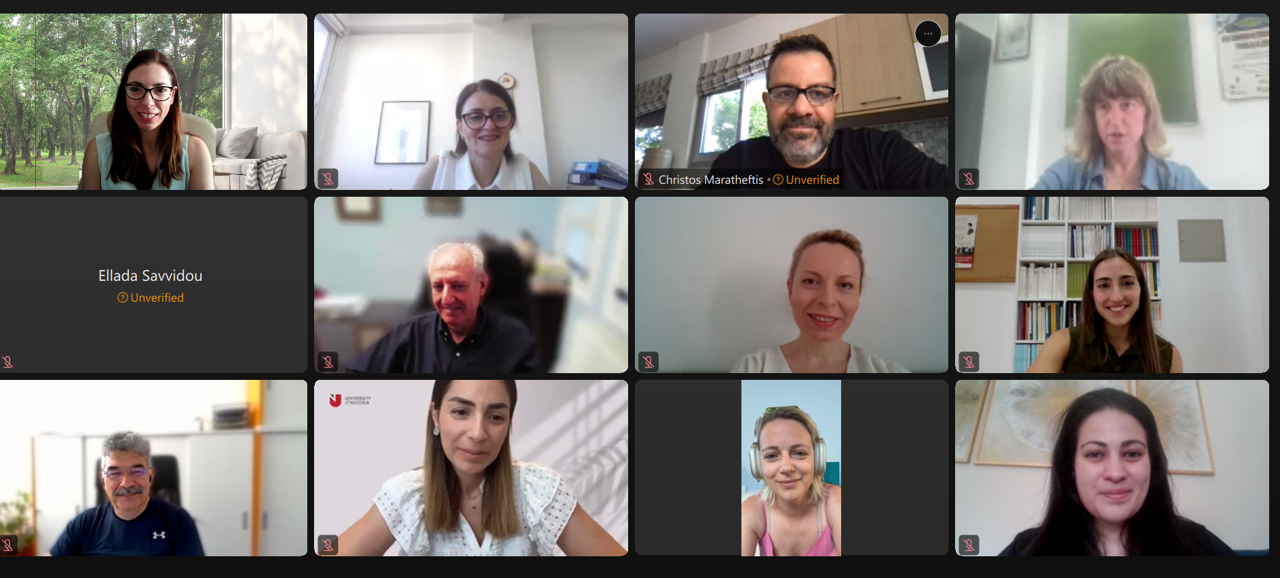
The fourth meeting of the VHEalthLab project took place in July 2025, bringing together partners to discuss the latest developments in the creation, localisation, and pedagogical integration of virtual biology labs in higher education.
Significant Progress in Work Packages 4, 5 and 6
During this meeting, the consortium reviewed recent achievements across two major work packages:
WP4 and WP6– Development and Translation of Virtual Labs
WP4, led by Dr. Eleni Dafli (Aristotle University of Thessaloniki) and WP6, led by Dr Gabriel Lazar (Ascendia) have made substantial progress. Four interactive case-based virtual labs have now been integrated into the platform in English. One of these cases has been fully translated into all partner languages (Greek, Spanish, and Romanian), ensuring accessibility across regions. Testing of the platform and virtual cases is ongoing, involving faculty, students, and pre-service teachers from both higher and secondary education institutions.
WP5 – Pedagogical Guidelines for Implementation
Partners also discussed the first results of WP5, which focuses on the development of pedagogical guidelines to support educators in using the virtual labs effectively. Teacher Module 1 has been uploaded on the platform, while Modules 2 and 3 are currently under development. Translation of teacher materials, including detailed notes, is underway to support multilingual teaching and inclusive practice.
The meeting concluded with an outline of next steps, including expanding the number of localised cases, continuing testing and feedback collection, and finalising the pedagogical modules. The project continues to build momentum through active dissemination at conferences and on social media platforms.
About the Program
The VHEalthLab program is funded by the European Union under the Erasmus+ Cooperation Partnerships in Higher Education initiative. The program's main objective is to create high-quality, open-access virtual labs that align with STEM curricula and supplement traditional lab work. Coordinated by the University of Nicosia, with participation from the Ministry of Education, Sports, and Youth in Cyprus, this two-year initiative aims to advance virtual learning tools across health science education.